Perhaps everyone runs from the “taxman”?
Leela

Synopsis
The TARDIS arrives on Pluto which has been made habitable and turned into a giant factory where the ruthless Company exploits its under-paid workers.
Review
On the face of it, a story about taxation does not sounds as though it would make a riveting Doctor Who story. I am certainly intrigued to wonder what younger members of the audience thought of it when it was transmitted.
It’s the taxes. I can’t pay the taxes!
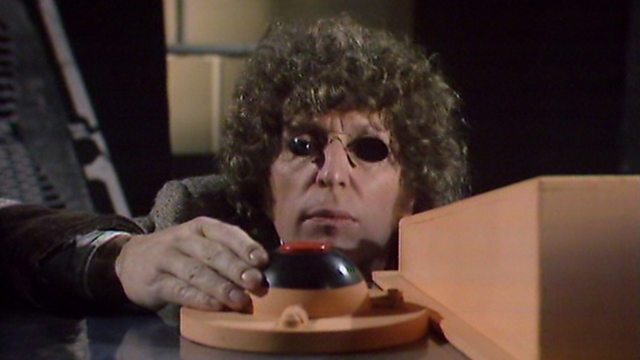
Oh, the taxes! My dear old thing, all you need is a wily accountant! Would you care for a jelly baby?
Cordo and the Fourth Doctor
I think it’s safe to say that, if any writer could have made this kind of story entertaining, it was certainly Robert Holmes, who slots lots of moments of dark humour and comedy into his satirical takedown of the tax system. Whilst the death of Cordo’s father, the ultimate tax liability that Cordo faces and the additional taxes for the level of service he has received is funny, in a twisted way. Whilst the origins of the story might be firmly rooted in Holmes’ frustrations with the government, the story instead creates a villanous corporation who have subjugated humanity on Pluto, using a chemical pumped through the city to make them rich. Holmes gives us a story in which the work force are utterly subjugated and forced into giving their leisure time over to work in order to pay tax burdens incurred by just trying to do the bare minimum. In Cordo’s case, this is just trying to ensure that his father receives the best care possible before he passes away, and the news that all of his hard work saving for the tax rate has not been enough mean that his decision to try and throw himself from the roof feels completely justified. Whilst the team of Hinchcliffe and Holmes nominally left at the beginning of the Season, The Sun Makers feels like a handing of the baton over to the incoming producer, Graham Williams, and feels like a hybrid of the gothic horror style of the previous era towards a lighter, more comedic approach to Doctor Who.
The villainous Company have commoditised the making of suns and restricting the workers access to sunlight, and whilst the workers know of the Company’s existence, they have no idea what they actually do. The Gatherer and the Collector manage to be two of the most despicable and horrific foes the Doctor faces, without necessarily posing the same kind of threat that the Daleks, the Cybermen or the Sontarans ever do. They are ruthless characters, but comedic. The Gatherer’s sycophantic platitudes for the the Collector get even funnier as the story goes on, combined with the Gatherer’s horror at the Collector’s idea that he pay the reward for information on the Doctor himself. The Gatherer and the Collector’s glee at the idea of the steaming of Leela, and the Collector’s anger at not being able to hear the intracicies of Leela’s death when there is interference with the signal. Both are truly horrific and the audience feel as though they do get their comeuppance in the end.
I think that the location work of the story does not really do the story any favours. Whilst the story benefits from being shot on location, this does also betray the show’s lack of money, as there are lots of scenes shot in corridors which feature very little set dressing. The locations themselves feel unique and visually distinct enough, especially as the Doctor descends to the lower levels to find the Others, which give an impression of the scale of this business on Pluto. Pennant Roberts does the best he can with what he is given, and I think that his casting is spot on. There is not a member of the guest cast who feels out of place, which is a credit to both Roberts’ casting and their respective performances.
It feels as though I always write this in these Fourth Doctor reviews, but despite the tensions between Tom Baker and Louise Jameson behind the scenes, it does not bleed through to the screen, which is to both actors’ credit. The story does keep the Doctor and Leela separated for the majority of the story, but when they are together, the story does not feel as though these are two actors failing to get along. In fact, the opening scene of them in the TARDIS with K9 is really good fun, showing us an argumentative but warm relationship between the two leads. Tom Baker continues to command the screen, and his Doctor continues to stand up for the oppressed, managing to reinvigorate life into a rebellion movement that seems to be mostly defeated. In this story, the Doctor essentially masterminds the downfall of a despotic regime because of the impact on Cordo.
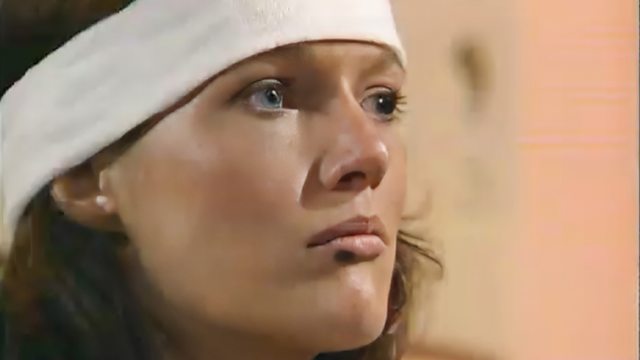
Whilst Baker’s mercurial and magnetic personality is no surprise, Louise Jameson really manages to command the screen in a really powerful performance which sees Leela put through the wringer, including nearly being steamed to death. If this had been Leela’s departure story, as originally intended, it would have been a high note for the character to go out on. Holmes even manages to find something to give K9 something to do, even if it is essentially being some extra fire power rather than really contributing to the story.
Verdict: The Sun Makers is a gem of the early Graham Williams era, and much more promising that the initial premise suggests. The cast, writing and direction are on good form and I will be sure to revisit The Sun Makers again before too long. 9/10
Cast: Tom Baker (The Doctor), Louise Jameson (Leela), John Leeson (K-9), Richard Leech (Hade), Jonina Scott (Marn), Roy Macready (Cordo), William Simons (Mandrel), Michael Keating (Goudry), Adrienne Burgess (Veet), Carole Hopkin (Nurse), Henry Woolf (The Collector), David Rowlands (Bisham), Derek Crewe (Synge), Colin McCormack (Commander) & Tom Kelly (Guard).
Writer: Robert Holmes
Director: Pennant Roberts
Producer: Graham Williams
Composer: Dudley Simpson
Parts: 4
Original Broadcast Dates: 26th November – 17th December 1977
Behind the Scenes
- The origins of the story lay in writer Robert Holmes’ problems with the Inland Revenue. Producer Graham Williams was uncomfortable with some of the criticism and this meant that the race of the Collector was changed from the Userers (an old-fashioned term for money lender) to Saurians, before it was agreed on being the Usurians.
- At one point during the writing of this story, Leela would have been killed off, however, the production team decided against going in this direction as it would have necessitated the Doctor grieving partway through the story, which was deemed not to be appropriate for the story or Tom Baker’s Doctor.
- Graham Williams was under pressure from the BBC to keep production costs low and attempted to stop filming on location in Bristol. Director Pennant Roberts found that the Wills Tobacco Factory offered other locations that meant that studio sets may not be needed.
Cast Notes
- Michael Keating would go on to appear in The Twilight Kingdom as Major Koth, Inspector Chardalot in Year of the Pig, Calvert in The Evil One and Kreekpolt in The End (Graceless).
- Tom Kelly would go on to play a Vardan in The Invasion of Time.
Best Moment
There are a lot to chose from. I really like the first TARDIS scene, or the ultimate conclusion of the Collector.
Best Quote
These taxes; they are a sacrifice to the Gods?
Taxes are much more painful.
Leela and the Fourth Doctor
Previous Fourth Doctor review: Image of the Fendahl
For more Fourth Doctor reviews, click here.

 The Impossible Blog
One thought on “The Sun Makers”