Thirty six years, three months, four days of solitary confinement. This facility was built to give people the chance to live. I walked in here and I died.
Amy Pond

Synopsis
On arriving at the Two Streams facility, Amy is separated from the Doctor and Rory and on a different time stream to them. With Two Streams being a kindness facility for victims of Chen-7, a disease fatal to two-hearted species, Rory must find Amy alone.
Review
The Girl Who Waited is a character study into Amy and Rory’s relationship, as well as the damage that travelling with the Doctor can do to his companions. The story has a small cast and could be said to only really be a two-hander. I certainly consider it to be a Doctor-lite episode, although I’m aware it doesn’t meet the usual definition.
I really like the idea of the two time streams facility, which feels quite quintessentially like a Moffat-era idea, as well as being quite simple. From a production standpoint, it means that the story is able to reuse the same sets with relative ease, but that doesn’t ultimately take anything away from the story. Equally, the idea of well-meaning software malfunctioning is another Moffat trope that Tom MacRae has used here, which makes his story really fit into the era, that we have most recently seen used in Boom. The Handbots are ultimately well-intentioned, but have no concept that people may end up in their facility by mistake, which is obviously a key part of this story. The story gives us a novel concept of keeping the Doctor out of the main narrative, the Chen 7 virus which means that the Doctor must stay in his TARDIS. Whilst it means that the Doctor remains involved in the story, I do think that it still qualifies as being Doctor-lite, in the same way that Flatline does too, in that the respective companions are key to the story’s resolution.
The story is well directed by Nick Hurran, and manages to keep the pristine white sets visually interesting, aided by some augmented location filming in the gardens and give this story a suitably cinematic feel. Hurran would go on to direct The Day of the Doctor, and based on this story, it is easy to see why. The story is further helped by the decision to have Karen Gillan play both versions of Amy, which definitely helps the audience to deal with the emotional consequences. This is an intimate and character-driven story, with a small cast, and Hurran manages to convey that intimacy really nicely to the screen.
This is your fault.
I’m so sorry, but Rory…
No, this is your fault! You should take a look at a history book once in a while, see if there’s an outbreak of plague or not!
That is not how I travel!
Then I do not want to travel with you!
Rory Williams and the Eleventh Doctor
With the dangers of travelling with the Doctor brought front and centre in this story, it is perhaps a good time to focus on what Amy and Rory have lost as a result of encountering the Doctor. The Doctor’s arrival in The Eleventh Hour, crash landing in the garden of the young Amelia Pond and his subsequent disappearance from her life, had a significant impact on her childhood. She then went through losing her fiancé, due to the Doctor’s recklessness in Cold Blood, pregnancy and childbirth, which was manipulated by foes of the Doctor, and now this abandonment. On top of that, Rory waited 2,000 years guarding Amy, and they have both lost the experience of bringing up their child together. Whilst Amy had always been much more geared up towards travelling with the Doctor and defending him to an extent, this has been something that Rory doesn’t feel the same way about. From all the way back in Vampires of Venice, Rory tells the Doctor that people like Amy just want to impress him and take incredibly dangerous risks in order to do so.
Arthur Darvill puts in a great performance as Rory, arguably amongst the most human of the Doctor’s companions. He is the only one of the three concerned with how humane the Two Streams facility actually is and the impact that seeing their loved ones fading away in front of their very eyes. Whilst the focus might be on the older Amy’s anger and resentment towards the Doctor, Darvill’s anger is also really well played, and you can feel it building as the story progresses, all the way up to that final scene.
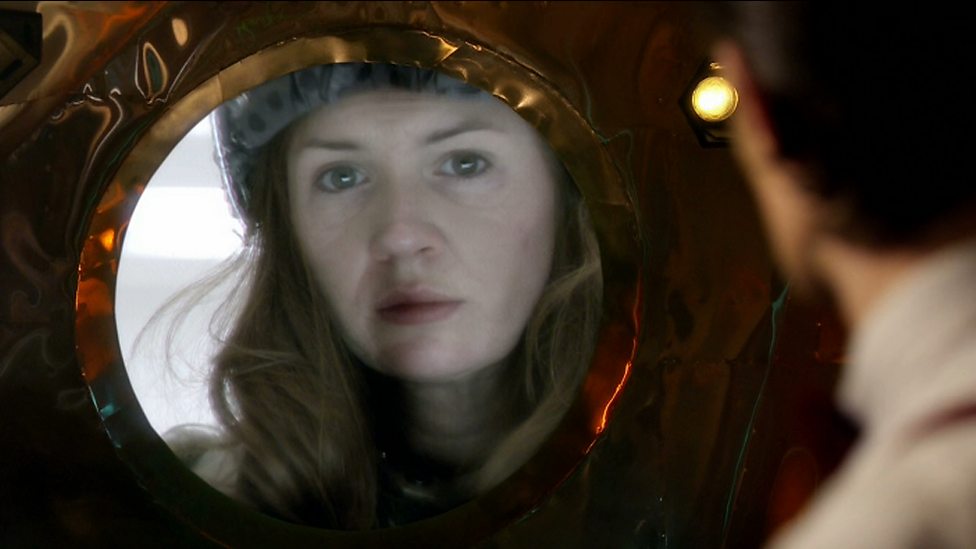
The true masterful performance is that of Karen Gillan though, who really truly shines as both the younger and older Amy, and there has clearly been a lot of thought into the resentment of the older Amy towards the Doctor. The two different Amy’s have a very different relationship with the Doctor, and Gillan manages to make the way that the older Amy snarls at the Doctor feel as though there is real anger and hatred behind each word. Even the way she look at Rory when she knows that the Doctor is speaking simmers with hostility. Ultimately though, this story is really important for Amy and her relationship with Rory. Both characters have to make choices, with Rory having to ultimately make the choice between the younger and older versions of his wife, and whilst Amy has already made her choice, the fact that she has created a Handbot version of Rory shows her commitment to him and accordingly, her realisation that she needs him to maintain any semblance of sanity. A standout scene which shows how good a performance this is is the scene where the younger and older Amys come face to face through the magnifying glass, which does genuinely feel as though they are talking to the same person.
No, she’s not real.
She is real. Let her in.
Look, we take this Amy, we leave ours. There can only be one Amy in the TARDIS, which one do you want? It’s your choice.
This isn’t fair. You’re turning me into you.
The Eleventh Doctor and Rory Williams
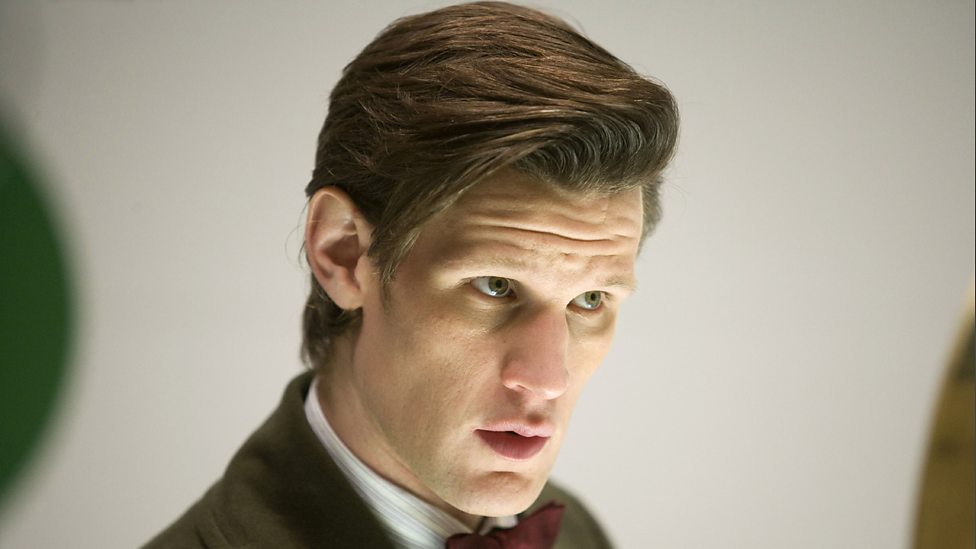
The Doctor is quite manipulative in this story and the story is one that is focused on the repercussions and dangers of travelling with the Doctor, where simply stepping through the wrong door can lead to danger and death. The Doctor clearly feels guilt for getting Amy stuck, and does ultimately win the day, but this is an important moment for this Doctor in realising that these companions might have got to a point where they need to make a decision about whether to continue to travel with him. Matt Smith does a really good job of conveying the moral dilemma this story puts him in, and there are lots of subtle looks and mannerisms which allow him to speak a thousand words. Despite the fact that Smith and Gillan are not actually speaking to each other on set in those scenes where the Doctor is seeing her through the glasses, it does genuinely feel that they are interacting with each other, which is credit to both actors.
Verdict: The Girl Who Waited is a powerful character piece, driven by great performances from Karen Gillan, Arthur Darvill and Matt Smith. 9/10
Cast: Matt Smith (The Doctor), Karen Gillan (Amy Pond), Arthur Darvill (Rory Williams), Josie Taylor (Check-in girl) & Imelda Staunton (Voice of Interface).
Writer: Tom MacRae
Director: Nick Hurran
Producer: Marcus Wilson
Composer: Murray Gold
Original Broadcast Date: 10th September 2011
Behind the Scenes
- Working titles for this story included The Visitors’ Room, The Visiting Room and Kindness.
- This story switched places with The God Complex and was filmed at the same time as Closing Time. Tom MacRae wrote the Chen-7 virus to only affect species with two hearts as a way of reducing the Doctor’s role in the story. Originally, the Doctor would have entered the facility with Rory.
Best Moment
I really enjoy the ending fight sequence as both Amys and Rory make their way through the handbots to get to the TARDIS.
Best Quote
Interface.
I am here, Amy Pond.
Show me Earth. Show me home. Did I ever tell you about this boy I met there? He pretended to be in a band.
Older Amy Pond and Interface
Previous Eleventh Doctor review: Night Terrors
For more Eleventh Doctor reviews, click here.

 The Impossible Blog
One thought on “The Girl Who Waited”