Emotions! Love! Pride! Hate! Fear! Have you no emotions, sir, hmm?
The First Doctor
Synopsis
The TARDIS arrives at the South Pole in 1986, and finds a space base there. A tenth planet has been detected in the solar system. It is the Earth’s twin planet, Mondas, and its inhabitants are desperate for power.
Review
The Tenth Planet is a story that is significant for two reasons. It introduces the Cybermen, who along with the Daleks would go on to be a recurring foe of the Doctor, and the concept of regeneration. Whilst the show had already had a revolving door of companions for its first three years, regeneration would be far more important to the ongoing survival of the show, allowing it to chop and change its lead actor when required.
What did you say, my boy? It’s all over. That’s what you said. No, but it isn’t all over. It’s far from being all over.
The First Doctor
Of those two elements, regeneration is arguably the most important. Whilst it wouldn’t be referred to as such for several years, and the Doctor going through two more incarnations, it has ensured the show’s longevity. Brought in as a necessity to address William Hartnell’s failing health, it has ensured that the show endures to the present day. It has arguably stopped actors from becoming typecast, although for a lot of them it probably be amongst the first things named in their obituaries. Hartnell’s health doesn’t really reflect on screen in The Tenth Planet – the only clue that something might be up is when he passes out at the start of episode 3, which sees Ben step into the leading role. With the First Doctor, the male companion is definitely a necessity to take the more heroic role, whilst the same cannot be said for Polly, who I don’t recall really doing anything of note here. The actual regeneration sequence, complete with the dials of the TARDIS moving by themselves, is a really effective and simple regeneration, a far cry from how bombastic and overblown they have been in the modern series.
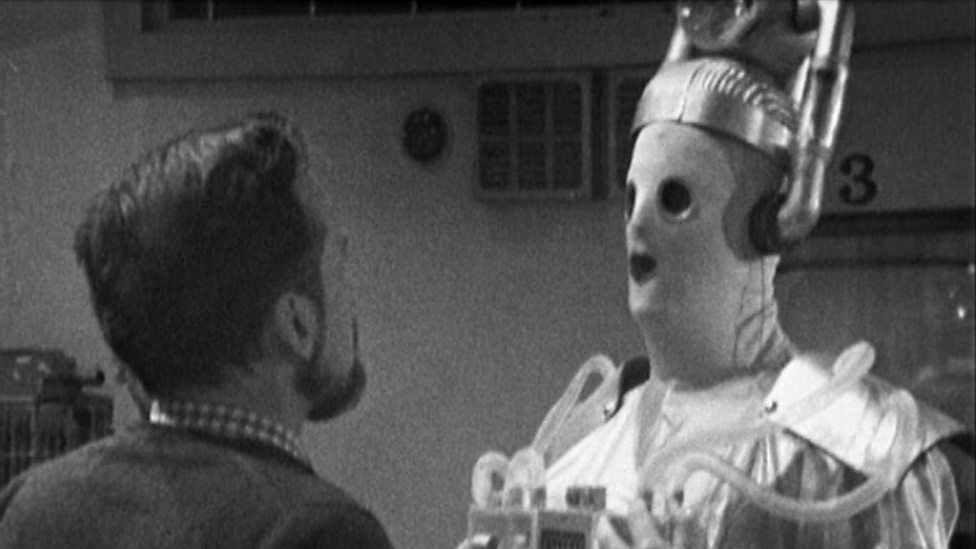
The Cybermen originate in Kit Pedler taking the idea of replacement limbs and cybernetics, and the belief that the endgame of this would be humans without anything to identify them as human. Whilst this might seem far-fetched, it is a good idea, and the Cybermen’s longevity is perhaps testament to how successful they are. They would go on to essentially usurp the Daleks in Patrick Troughton’s era, as the evil creatures from Skaro were unavailable to the show as Terry Nation tried to sell them overseas. They have met the majority of the Doctors, either on television, or in Big Finish stories. As the Twelfth Doctor finds in World Enough and Time, the Cybermen have parallel evolution across the universe. Speaking of the Twelfth Doctor, on watching The Tenth Planet, it is easy to see why they made such an impression on a young Peter Capaldi and why he was so keen for them to return. They are really striking, from walking across the South Pole towards the space base, to disguising themselves as members of the crew with cloaks before infiltrating the base. Their human hands are vestiges of what they once were, and the sing-song voice makes them really effectively creepy. The way their mouths just open when they speak is eerie. In their debut story, they look the most like humans and in subsequent appearances, they become more and more robotic.
The fundamental idea of The Tenth Planet is solid and works really well. We are in the midst of the space race at the time that this story was originally conceived and broadcast, so bringing the narrative twenty years into the audience’s future gives a chance to give an idyllic view of future space travel, including frequent trips to the Moon. The idea of the Earth having a duplicate planet, which is identical but upside down, named Mondas, who are slowly losing their power. They have come seeking to take over the Earth to ensure their survival, and the way the planet’s arrival affects gravity on Earth, destroying one spaceship in the process. The strongest member of the guest cast, Robert Beatty, plays the base commander who is hostile towards the Doctor, Ben and Polly throughout the story, but he does get a chance to be a more well-rounded character when his son,
I do feel that I need to pay tribute to William Hartnell, and the First Doctor more generally. An incarnation that started as a crotchety old man in a junkyard who would try an kill a caveman with a rock developed over the space of three seasons into the Doctor that a modern audience would be able to recognise. Hartnell did a sterling job, and The Tenth Planet is no exception. Despite health issues and behind the scenes drama, Hartnell could hold his head up high when handing the show over to Patrick Troughton, having one of his most defining lines to the Cybermen and sparring with Cutler in the face of his opposition.
Ben and Polly have remarkably little to do here, which is a shame. Ben gets a few moments to be an action hero, using the projector to try and overwhelm them, and he is instrumental in the base trying to fight back against the Cybermen. He attempts to sabotage the missile, along with Barclay too. It’s a disappointing story for Polly who really doesn’t have very much to do except be captured and offer to make the coffee. It’s a bit sad knowing what is coming for Anneke Wills and Michael Craze, who see their roles diminished after the introduction of Frazer Hines just two stories later, and having an underwhelming exit in The Faceless Ones later in this season.
Verdict: The Tenth Planet is an effective introduction to regeneration and the Cybermen. 7/10
Cast: William Hartnell (The Doctor), Anneke Wills (Polly), Michael Craze (Ben), Robert Beatty (General Cutler), Earl Cameron (Williams), Dudley Jones (Dyson), David Dodimead (Barclay), Alan White (Schultz), Shane Shelton (Tito), John Brandon (American Sergeant), Steve Plytas (Wigner), Christopher Matthews (Radar Technician), Reg Whitehead (Krail and Jarl), Harry Brooks (Talon and Krang), Gregg Palmer (Shav and Gern), Ellen Cullen (Geneva Technician), Glenn Beck (TV Announcer), Roy Skelton and Peter Hawkins (Cybermen Voices), Christopher Dunham (R/T Technician) & Callen Angelo (Terry Cutler).
Writers: Kit Pedler and Gerry Davis
Director: Derek Martinus
Producer: Innes Lloyd
Parts: 4
Original Broadcast Date: 8 October – 29 October 1966
Behind the Scenes
- This is the first regeneration in the show’s history, although the process would not be named until Planet of the Spiders.
- The story also marks the first appearance of the Cybermen.
- As the first story of Season 4, The Smugglers, was produced as part of Season 3, this is the only story in Season 4 that William Hartnell worked on.
- Episode 4 does not exist in the BBC Archives, and the only footage that survives are short clips. This includes the regeneration sequence, which was saved from erasure by being included in a Blue Peter episode in the early 1970s.
Cast Notes
- Reg Whitehead played Cybermen in The Moonbase and The Tomb of the Cybermen and a Robot Yeti in The Abominable Snowmen.
- Gregg Palmer would go on to play Lieutenant Lucke in The War Games.
Best Moment
The first appearance of the Cybermen in the snow on the South Pole.
Best Quote
What’s happened to you, Doctor?
Oh, I’m not sure my dear. Comes from an outside influence. Unless this old body of mine is wearing a bit thin.
Polly Wright and the First Doctor
Previous First Doctor review: The Smugglers
Next story: The Power of the Daleks
For more First Doctor reviews, click here.

 The Impossible Blog
I remember first seeing The Tenth Planet on VHS. Twice Upon A Time has affected how I look back on it now as I’m sure it has for many. I also pay tribute to William Hartnell for starting it all. In a role that can oppose agism, the sad decision of having to replace him, particularly eight episodes into the 4th season instead of the season finale as usual for most Doctors, was quite heartfelt in An Adventure In Space And Time. So I’m grateful to have originally seen The Tenth Planet when I did to appreciate its purity for how the first regeneration would forever influence the franchise.
Thank you for your review and Happy Holidays. 🎄
LikeLiked by 2 people
It’s mad to think that Peter Capaldi was older than William Hartnell when he took on the role. Hartnell was part of a generation that seemed so much older because of what they went through in World War II. He’s a wonderful actor and deserves all the plaudits for shaping a character who persists to this day.
Thank you. Happy Christmas!
LikeLiked by 1 person