Well, I’ve had a happy life. Can’t complain. Nearly seven hundred and sixty. Not a bad age.
The Fourth Doctor
Synopsis
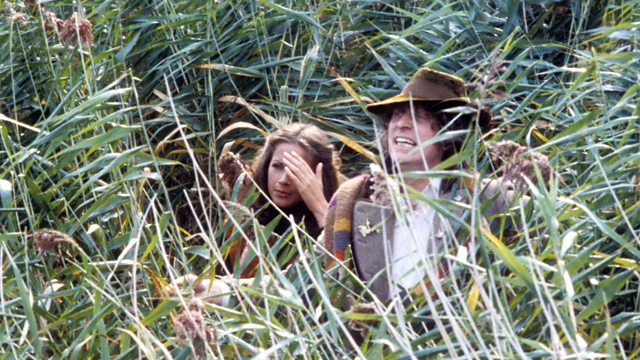
Tracing the fifth segment of the Key to Time to the third moon of Delta Magna, the Doctor and Romana are soon caught up in the conflict between humans and the Swampies.
Review
The Power of Kroll marks the first time in my opinion that the Key to Time arc has stumbled. It has all the marks of a story that should be much better than it is, such as being written by veteran writer Robert Holmes. This is coincidentally the final Holmes-penned story to be covered on the blog – it is hardly the high we could have wished for.
I think that it’s easy to tell that Holmes’ heart wasn’t really in this one. Feeling constrained by the season arc, having to include Kroll and not include his usual humour means that this story feels as though this story could have been written by anyone. At times, I had to remind myself that this wasn’t written by Bob Baker and Dave Martin. It seems like how this story was handled by production. Robert Holmes was not keen to be tasked with a historical, The Time Warrior, as he did not have any interest in medieval history, but he wrote a compelling story. Holmes famously got his revenge on Terrance Dicks, the script editor at the time, by commissioning Dicks to write Horror of Fang Rock when he became script editor. There are some mitigating circumstances, as this story was commissioned at short notice, and it is telling that a lot of elements of Holmes’ writing that are missing – for instance, his double acts. Ultimately, The Power of Kroll recycles a lot of Doctor Who tropes and doesn’t do anything new with them. The result is a rather listless story.
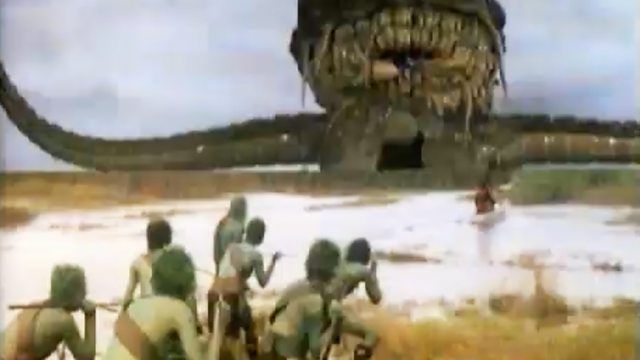
One of the story’s issues is Kroll. Whilst the ambition of creating the show’s biggest monster is admirable, it was perhaps worth checking that ambition matched the show’s budget. Kroll doesn’t look awful, but he is used sparingly. Holmes subverts this rather well by having one of the Swampies fill the role during Romana’s sacrifice at the end of Part 1. The issues are more when Kroll turns his attentions to the refinery. The model of the refinery looks ridiculous throughout most of the story, but especially when Kroll attacks. That’s a shame as the moments where Kroll breaks the windows and breaks the pipes are quite effective.
If Kroll doesn’t work, one aspect that really does is the Swampies. Robert Holmes has taken the lead from the Native Americans, as the Swampies have been driven from Delta Magnus to the third moon, and now the human colonisers have come to destroy their homes again. The Swampies also worship Kroll, believing that he is a God who will protect them, thanks to the teachings of Ranquin. The truth is only revealed later when Kroll shows that he does not discriminate between the Swampies and the crew of the refinery.
It feels like the story wastes what could be a pretty strong guest cast. It features Philip Madoc and Neil McCarthy in rather unforgiving roles. McCarthy plays the genocidal leader Thawn, whilst Madoc is one of the crew, Fenner. They spend a lot of this story staring at screens, which is not especially compelling. Thawn has the potential to be an interesting villain, but this story doesn’t really give him the chance. John Abineri is equally underserved here as Ranquin, as is Glyn Owen as the gun runner Rohm Dutt shows potential to be considered amongst Holmes’ best characters but gets killed off before he gets the chance.
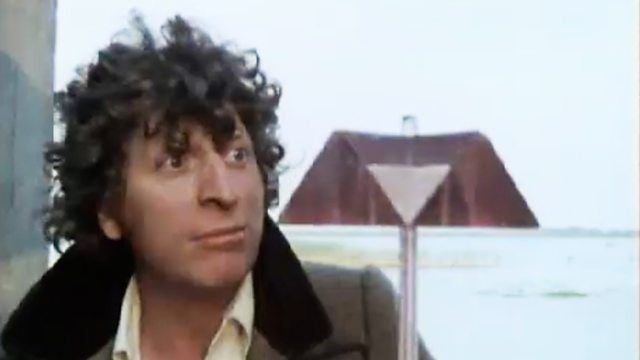
Tom Baker and Mary Tamm feel as though they are going through the motions here, and neither seem particularly engaged with the narrative. It is difficult to identify anything that Romana does besides getting captured. The Doctor, is well, the Doctor in this story. There seems to be a look in Tom Baker’s eye that suggests that he may well be done with all of this nonsense at points. The scene where he shatters a window with his voice seems to be a step too far, even for the Doctor.
Verdict: The Key to Time seems to hit the buffers coming into the final stretch. 4/10.
Cast: Tom Baker (The Doctor), Mary Tamm (Romana), Neil McCarthy (Thawn), John Abineri (Ranquin), Philip Madoc (Fenner), Glyn Owen (Rohm-Dutt), Carl Rigg (Varlik), Frank Jarvis (Skart), John Leeson (Dugeen), Grahame Mallard (Harg) & Terry Walsh (Mensch).
Writer: Robert Holmes
Director: Norman Stewart
Producer: Graham Williams
Composer: Dudley Simpson
Original UK Broadcast Dates: 23rd December 1978 – 13 January 1979
Parts: 4
Behind the Scenes
- Working titles for this story included Moon of Death, Horror of the Swamp and The Shield of Time.
- Robert Holmes did not enjoy writing this story, and would not return to write for the show for five years. He did not like having to work within a story arc, feature a large monster and being asked to tone down his humour.
- Romana is the only female character to feature in this story. This was the first time this had happened since Pyramids of Mars and would not happen again until Cold War.
Cast Notes
- John Leeson is the voice of K9. Due to the marshy conditions on location in this story, it was deemed not possible to use K9 in this story. Leeson stepped into the role of Dugeen after the original cast actor, Martin Jarvis, became unavailable.
- Philip Madoc had previously appeared in The Krotons, The War Games and The Brain of Morbius. This would be his last role in televised Doctor Who. He had been offered the role of Thawn, but Neil McCarthy had already accepted the role. He took the role of Fenner when Alan Browning, who had originally been cast, was taken ill but was disappointed with the minor role he was given.
- Neil McCarthy had previously appeared in The Mind of Evil.
- John Abineri had previously appeared in Fury from the Deep, The Ambassadors of Death and Death to the Daleks.
- Glyn Owen would go on to appear in the Fifth Doctor audio story Nekromanteia.
- Frank Jarvis had previously appeared in The War Machines and Underworld.
- Terry Walsh was Tom Baker’s stuntman. He had appeared in a number of stories, including Terror of the Autons and The Sontaran Experiment.
Best Moment
It’s hard to choose one. Perhaps Dugeen standing up to Thawn, for all the good it does him.
Best Quote
Tell me, would you let a small band of semi-savages stand in the way of progress?
Well, progress is a very flexible word. It can mean just about anything you want it to mean.
Fenner and the Fourth Doctor
Previous Fourth Doctor review: The Androids of Tara
For more Fourth Doctor reviews, click here.

 The Impossible Blog
Kroll was one of my favorite reminders of how appealing the giant monsters were during Tom Baker’s era. The big reveal of Kroll being the fifth segment of the Key to Time is also one of my favorites. For the final performance in classic Who by Philip Madoc, it’s certainly memorable. It was one of the first three times I saw Neil McCarthy. The other two were the original Clash Of The Titans, where he played the evil Calibos, and a small role he had in Terry Gilliam’s Time Bandits. It was interesting to later on see him play a much more likeable character like Barnham in The Mind Of Evil.
And then there’s the distinguished John Abineri who excels as Ranquin. A most sympathetic reminder of how a leader can be lead astray by believing in the wrong things. As for John Leeson, it’s interesting how different his normal voice is from K-9’s. He is vocally very talented as he also was voicing the Nucleus for The Invisible Enemy.
Thank you for your review.
LikeLiked by 1 person