I know you’re under considerable strain, Doctor, but please, keep a grip on yourself.
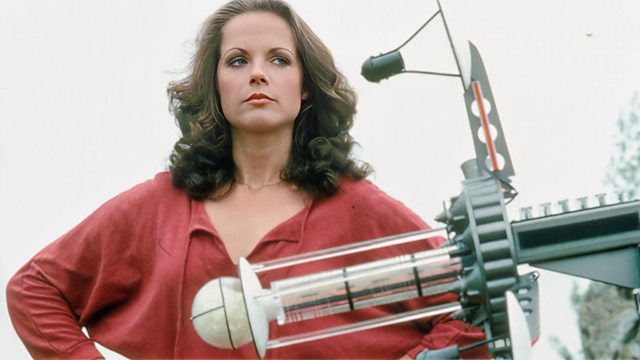
Professor Amelia Rumford
Synopsis
The Doctor and Romana track the third segment of the Key to Time to the vicinity of an ancient stone circle on Earth. But sinister forces are at work and the stones hide a secret.
Review
The third story in the Key to Time season certainly initially takes a different tone to the two that have gone before it. It starts off as quite gothic, before taking a drastically different approach in the second half.
Now remember. Give it thirty seconds and then ‘pow!’
‘Pow’?
Yes, ‘pow!’ Pow – pow’s a technical expression, Professor, it means all the microcircuits have been fused in one great ‘gyuh!’ of molten metal.
The Fourth Doctor and Professor Amelia Rumford
David Fisher’s script for The Stones of Blood is rather good fun. This story starts off with a gothic tone, with a cult who worship and make sacrifices to a 4,000 year old deity, along with the Ogri, creatures who are made of rock who feed on blood. It’s a tonal shift from The Ribos Operation and The Pirate Planet, which have been lighter in tone, but it does show that the programme is still able of conjuring up scares. The way that the Ogri casually dispatch of the two campers in Episode 3 is one of the darker moments in the show’s history. What may make the story divisive is the handbrake turn into a legal comedy with the arrival of the Megara. In my opinion, this makes the story more fresh and memorable. There are enough gothic stories in the early Tom Baker seasons, and this shift works well and feels organic enough as the Doctor is put on trial for breaking the seal holding them in their vessel. Fisher’s story is helped by Darrol Blake’s decision to have this story filmed solely on video, which make it feel consistent, the miniature model of the prison ship looks great and Dudley Simpson’s score, which is one of his strongest in his tenure as composer. The Ogri, which could come across as looking as one of the more ridiculous aliens in the show’s history, but manage to feel intimidating throughout.
The guest cast are strong here too. Beatrix Leahman is a particular standout playing Amelia Rumford, an expert in the Nine Travellers. It is nice to have the Doctor dealing with an older woman and treating them with respect and compassion, and Rumford is memorable for the way that she throws herself into the story and helping the Doctor. Leahman gives a sense of warmth, but is certainly capable and not someone that you want to get on the wrong side of if her comments about other academics are anything to go by. Her friend Vivien Fay, played by Susan Engel, is also a great addition. Of course, Fay is actually posing as the Celtic deity the Caileach, but is in reality the fugitive Cessair of Diplos. It’s an interesting approach having Fay appear to be an ally at first but turn out to be the big bad, but it certainly packs a punch. The simplicity of the change of her appearance all works really well.

The Megara are also interesting. Having seen The Stones of Blood once before, I remembered them as being more like the Vardans from The Invasion of Time, who are one of the weakest foes from a design stand point, but the lights are simple and work effectively. I particularly enjoyed their stance on justice, which is rather black and white and doesn’t need to bother with things like evidence, witnesses or fair trials. One of the Megara represents the Doctor in his first, off-screen trial, but all they can get is the sentence of a quick and painless death. They also get hung up on the issue of breaking the seal on the door rather than the crimes that Cessair of Diplos has committed.

Tom Baker is particularly great in this story, and balances both tones really well. I think that he is particularly strong in the court room sequence, when the Megara put him on trial and the Doctor is trying anything to prevent himself from being executed. It gets to the point where the Doctor almost accepts that he is going to be executed, before finally finding a way of getting what he wants; the Megara to realise that the woman before them is who they are seeking. Baker shines when he is representing himself, but also brings levity to the early stages, like messing around with his umbrella right at the start of the story.
It’s a big of an odd story for Romana, and she has a spiky relationship with the Doctor, who clearly doesn’t want to be told what he should be doing at the beginning of the story. She gets a good cliffhanger at the end of the first episode, even if it is perhaps unclear as to what is chasing her over the edge of the cliff. There are signs of Romana warming up a bit from her colder persona in the first two stories, but retains her haughtiness about Earth and humans. K9 has a fun story though, from erasing tennis from his memory banks to fighting the Ogri with Amelia Rumford.
Verdict: The Stones of Blood is a story that changes tones around half way through. This doesn’t feel jarring, and makes for a more entertaining story. 8/10
Cast: Tom Baker (The Doctor), Mary Tamm (Romana), John Leeson (Voice of K9), Beatrix Lehmann (Professor Rumford), Susan Engel (Vivien Fay), Nicholas McArdle (De Vries), Elaine Ives-Cameron (Martha), Gerald Cross and David McAlister (Voice of Megara) and James Murray & Shirin Taylor (Campers).
Writer: David Fisher
Director: Darrol Blake
Producer: Graham Williams
Composer: Dudley Simpson
Original UK Broadcast Date: 28 October – 18 November 1978
Behind the Scenes
- This story had the working titles of The Nine Maidens and The Stones of Time.
- The Stones of Blood is the 100th Doctor Who story, and Episode 4 was broadcast five days prior to the show’s 15th anniversary. Script editor Anthony Read asked David Fisher to write a scene that saw Romana and K9 present the Doctor with a birthday cake. This was cut by producer Graham Williams, who deemed the scene to be indulgent.
- The story was initially written with the Doctor approaching Romana, leading to her falling over the cliff at the end of Episode One, however, Tom Baker refused to film this, believing that it would be too scary for children. He did agree to record his voice calling Romana’s name, which is used in the finished episode.
- This is the only story in this season to be set on Earth, meaning that it is the only televised story in which the first incarnation of Romana visits the planet.
- It was intended that old monsters would be seen on the prison ship, however, only a Wirrn is seen in the finished episode. Permission was obtained to feature a Sea Devil from their creator, Malcolm Hulke, but they did not end up featuring.
Cast Notes
- According to director Darrol Blake, Beatrix Lehmann only agreed to appear in this story to learn how K9 worked.
- Elaine Ives-Cameron also played Estella in The Stones of Venice.
- Shirin Taylor played a customer in the Seventh Doctor story Dragonfire.
Best Moment
The conclusion of the Doctor’s trial by the Megara.
Best Quote
Doctor, may I ask you a personal question?
Well, I don’t see how I can stop you asking.
Are you from outer space?
No.
Oh.
I’m more from what you’d call ‘Inner Time’.
Professor Amelia Rumford and the Fourth Doctor
Previous Fourth Doctor review: The Curse of Time
Previous Key to Time review: The Pirate Planet
For more Fourth Doctor reviews, click here.

 The Impossible Blog
For the 100th Doctor Who story, The Stones Of Blood is memorable for many good reasons. Whether it was the first chance to K-9 to be allowed outside the TARDIS on contemporary Earth, the last role for an acclaimed actress like Beatrix Lehmann, or Susan Engel’s quite haunting mark on women playing Doctor Who villains more frequently at that point, it’s one of the best reminders of Doctor Who’s days of much simpler storytelling being more popular. I especially like the Doctor’s ‘inner time’ reference.
Near the end of the 70s when new shows like Blake’s 7, Sapphire & Steel and The Omega Factor were making new headway for British sci-fi TV, the classic Doctor Who could still excel and also thanks to a durable Tom Baker. I was especially pleased by how Mary Tamm’s growth as Romana was particularly evident in this story. Certainly in the first two cliffhangers. Her passing was another very sad loss for Whovians.
Thank you for your review.
LikeLiked by 2 people
It’s one of those stories where everyone is on top form, and shows that Doctor Who can still do the gothic and combine it with humour.
LikeLiked by 1 person
Graham Williams did what he could after the Hinchcliffe era in that regard with The Stones Of Blood and Image Of The Fendahl. So did John Nathan-Turner with State Of Decay. For Tom Baker’s humor particularly mixed with his quite formidable charisma, he could easily be in top form even in S18 where he seemed the least enamored with the role. He might have stayed too long. But in retrospect he had the most brilliant era that any actor playing the Doctor could be blessed with.
LikeLiked by 2 people